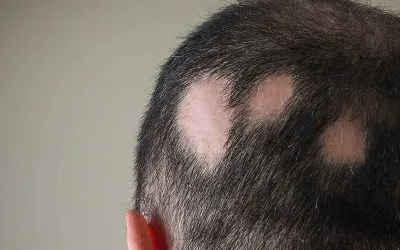

Instead of moving existing hair follicles, hair cloning is about multiplying them and creating new hair follicles from a limited number of donor hairs using cell culture — particularly relevant for women, who are often excluded from hair transplantation.

Research into hair cloning opens up new possibilities for treating hair loss, particularly for women. Read about the scientific development and what it could mean for you.
Exciting advances are being made in recent years within research into hair cloning. It is a technology that may in time revolutionise the treatment of hair loss, particularly for the many who today are not candidates for hair transplantation.
Current hair transplants are based on a simple principle: hair follicles are moved from one area of the head to another, typically from the neck to the thin-haired area at the front. The method is well documented and effective, but limited by one fundamental factor: the amount of available donor hair.
Hair cloning aims to solve precisely this problem. Instead of moving existing hair follicles, it is about multiplying them and creating new hair follicles from a limited number of donor hairs using cell culture.
Women with hair loss are today often excluded from hair transplantation, because the hair loss is typically diffuse and spread over the entire scalp rather than concentrated in a particular area. This means that there is no well-defined donor area to harvest from.
If the hair cloning technology can be matured for clinical use, it will open up a completely new treatment path for this group.
The idea of cloning hair follicles has existed for decades. Researchers have long known that the so-called dermal papilla cells, which are responsible for initiating and regulating hair growth, can in theory be cultured and transplanted. The challenge has been that these cells quickly lose their hair-promoting properties when cultured outside the body, and instead transform into ordinary skin cells.
The breakthrough came when researchers began to study how hair grows in mice and other rodents, whose dermal papilla cells turned out to be far easier to clone and transplant with a successful result. By imitating the biological conditions in which the rodent cells naturally find themselves, it was possible to maintain the cells' hair-promoting function in human cells as well.
Researcher Colin Jahoda from Durham University in the UK, one of the pioneers within this field, has, together with colleagues from Columbia University Medical Center in New York among others, contributed significantly to mapping the mechanics behind the behaviour of dermal papilla cells. Jahoda has expressed optimism about the prospects: knowledge of the cells' growth mechanics opens up not only for cloning, but potentially also for the development of medicine and topical products that can stimulate hair growth.
Hair cloning is not yet available as a clinical treatment. The research is promising, but significant challenges remain, including ensuring stable and predictable hair growth, avoiding immune reactions and scaling the method for practical use. Experts assess that it will still take several years before the technology is ready for humans.
At Pilorum we follow the development closely. In the meantime we offer a range of well-documented treatments that can already today help both men and women with hair loss regardless of cause and extent.
Book a free 15-min consultation — no obligations, just an honest assessment of your situation and options.