
A disorder that also causes hair loss, but which falls into a completely different category from many other conditions associated with hair loss, is trichotillomania.
A disorder that also causes hair loss, but which falls into a completely different category from many other conditions associated with hair loss, is trichotillomania.
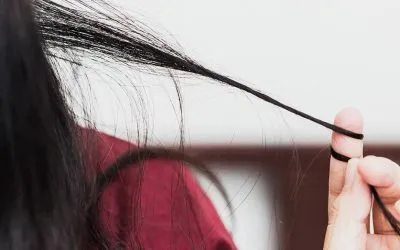
A disorder that also causes hair loss, but which falls into a completely different category from many other conditions associated with hair loss, is trichotillomania. The disorder is characterised by hair loss that has arisen as a result of repeatedly pulling out one's own hair. People with trichotillomania are so preoccupied with hair that pulling, twisting or tugging at their hair has become a compulsion.
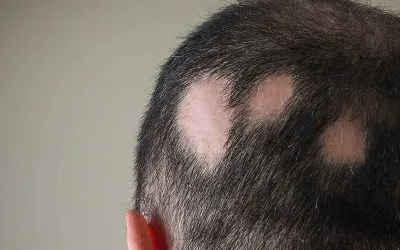
Through a lack of impulse control, the urge to pull at one's own hair is released. This action is thereby associated with a form of tension beforehand and a feeling of relief or satisfaction afterwards, and a great deal of anxiety and unease is thus connected to the pulling out of hair. Over time, and with many repeated instances of pulling out hair, a bald patch forms. This bald patch will often intensify the urge to pull out hair, which is why the patch will grow larger and larger each time impulse control fails. In this way it becomes a vicious circle of urge and satisfaction, and the longer this circle continues, the harder the hair roots and follicles will be affected.
The most obvious symptom of trichotillomania is, of course, the hair loss itself. However, this condition is often associated with a great deal of shame, which is why people with trichotillomania will usually try to hide both the behaviour and the hair loss itself. As a result, from the outside it can be difficult to see what is actually going on.
In general, not much is known about the underlying causes of why trichotillomania develops. However, it is believed that this disorder must share some of the same causes as other compulsive disorders. Like so many other mental disorders, there is also a genetic component here, where there may be hereditary disturbances in serotonin and dopamine levels. These chemical and biological connections may therefore contribute to causing the impulsive behaviour that leads to trichotillomania.
In order to treat the full disorder, a broad treatment plan is necessary. Therefore, there will most often be both a psychological treatment, which focuses on the impulsive behaviour and the underlying mechanisms that may form the basis of manias, as well as a restorative treatment of the scalp so that the hair can grow out again.
If the follicles are still able to produce hair, trichotillomania can be treated effectively without any major intervention. Here, the hair loss is treated like many other forms of hair loss with a restorative, stimulating treatment, focusing on the hair follicles.
The treatment makes use of certain growth-promoting factors, vitamins, minerals and peptides that help the previously inactive hair follicles under the skin to restart hair production.
Book a free 15-min consultation — no obligations, just an honest assessment of your situation and options.